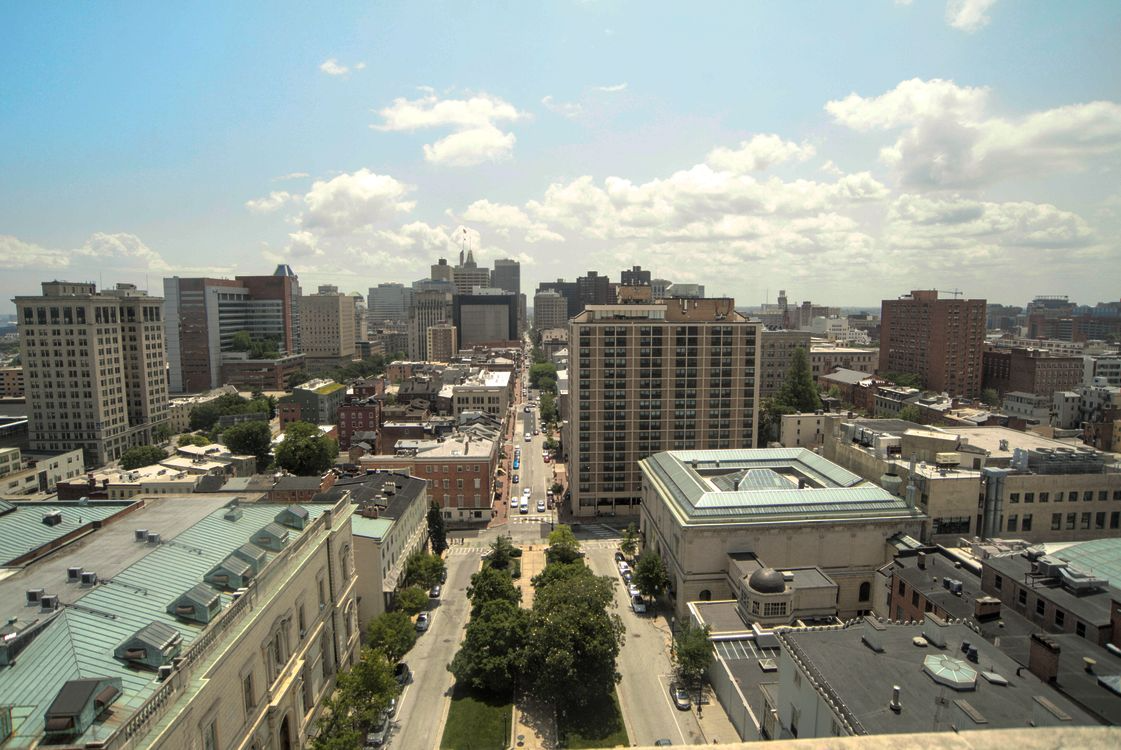
Baltimore is a port city on the Chesapeake Bay, built around a working harbor and mile after mile of brick rowhouses. Once a shipping, steel, and railroad powerhouse, it still shows that past in its cobblestone streets and cast-iron storefronts.
If you are moving to Baltimore, the best neighborhoods in Baltimore include Fells Point for its cobblestone waterfront, Roland Park for leafy streets and big houses, and Hampden for arts and rowhouses. This guide breaks down 10 Baltimore neighborhoods by type of housing, commute, price, and tradeoffs. The choice here usually comes down to a few things: whether you want to be on the water or up in the tree-lined north, how much space you need, and how much of your week you want to spend in a car.
Quick Guide: Best neighborhoods in Baltimore for…
- Inner Harbor: Best for waterfront high-rises, walkable dining, and easy attractions.
- Fells Point: Best for cobblestone streets, historic rowhouses, and nightlife.
- Canton: Best for waterfront parks, brick rowhouses, and newer condos.
- Federal Hill: Best for hilltop harbor views, historic rowhouses, and a public market.
- Mount Vernon: Best for grand brownstones, museums, and a central address.
- Hampden: Best for the arts, mill-town rowhouses, and independent shops.
- Roland Park: Best for leafy streets, large stone houses, and quiet.
- Charles Village: Best for colorful rowhouses, green space, and museums.
- Mount Washington: Best for wooded lots, a village feel, and light rail.
- Bolton Hill: Best for tree-lined streets, brick rowhouses, and brownstones.
Explore more Rentals in Baltimore, MD on Trulia.
Explore more Homes for Sale in Baltimore, MD on Trulia.
At a Glance: Choosing Where to Live in Baltimore
- Water or hills. The harbor neighborhoods put you steps from the promenade and cost the most to rent. Head north and prices ease as the streets climb into leafy, tree-lined ground.
- Rowhouses everywhere, with a few exceptions. Baltimore is a rowhouse city, so many homes are attached brick or formstone with a stoop out front. For a detached house on its own lot, look to Roland Park or Mount Washington in the north.
- Getting around depends on where you land. The harbor and central neighborhoods are truly walkable, and the free Charm City Circulator (a downtown loop bus) covers the business district. Farther out you will want a car. The region’s Light RailLink (light rail), Metro SubwayLink (subway), and MARC (Maryland Area Regional Commuter) trains help with some commutes but do not reach every neighborhood.
- Old and grand, or new and shiny. You can rent a converted 1800s warehouse or brownstone, or a modern high-rise near the water. Prices swing a lot by type and by how close you are to the harbor.
Baltimore Neighborhood Deep-Dives
Inner Harbor: Waterfront high-rises at the center of it all
The Inner Harbor is Baltimore’s front porch on the water, a curved basin ringed by a brick promenade where crowds gather on warm evenings. You can walk to the National Aquarium, the Maryland Science Center, and the tall ships docked at Historic Ships in Baltimore, then find dinner without moving your car. Shops and the water taxi dock are all within a few blocks, so daily errands are an easy walk.
Parking is the catch. Off-street parking usually means a garage, and street spots are scarce, so many buildings include a space or charge for one. You won’t need a car for much downtown, and the free downtown bus stops nearby. Reaching the northern job centers by car takes about 15 minutes off-peak and closer to 30 in rush hour.
High-rise apartments and condos line the water here, many built or converted in the last few decades with big windows facing the basin. Covered parking is a real draw in a neighborhood this dense, and the listings show it: about 92.9% of one-bedroom apartments on the market list a garage, as of August 2026, per Trulia data. Units are compact and view-focused rather than roomy.
The Tradeoff: You trade square footage and a quiet street for being able to walk out your door into the middle of everything.
If Not Here, Then… Try Federal Hill, just across the water, where harbor views come from a hilltop and historic rowhouses instead of towers.
As of July 2026, based on Trulia data:
- Average rent (1BR Apartment): $2,523.
- Average rent (2BR Apartment): $3,573.
- Average list price (1BR Apartment): $215,000.
See rentals in Inner Harbor, Baltimore and homes for sale in Inner Harbor, Baltimore on Trulia.
Learn more about Inner Harbor, Baltimore on Trulia.
Fells Point: Cobblestone streets on a historic waterfront
Fells Point is where Baltimore’s maritime history is easiest to see and feel. The cobblestone streets still rattle under your tires, and Thames Street runs right along the water to Broadway Pier. Broadway Market, a public market hall dating to the 1780s, stands at the center with produce, coffee, and lunch counters. Bars and music venues fill the old brick blocks, and the whole district gets lively on weekend nights.
Parking is tight and hard-won on the narrow cobblestone blocks, and much of it is permit-only for residents, so a spot off-street is worth paying for. You won’t need a car for daily life down here, since the water taxi and the free downtown bus both stop nearby. Driving downtown takes only about 10 minutes outside rush hour.
Brick rowhouses two and three stories tall line the neighborhood, many of them 18th- and 19th-century homes with shuttered windows and marble stoops. Converted warehouses along the water add loft-style apartments with exposed beams and tall windows. Rentals here have room to spread out, with the typical two-bedroom apartment on the market around 1,041 square feet, as of July 2026, per Trulia data.
The Tradeoff: You get real history and a walkable waterfront, but the cobblestones, the crowds, and the weekend noise come with it.
If Not Here, Then… Try Canton, a short walk east, where the waterfront is calmer and the rowhouses open onto a big green square.
As of July 2026, based on Trulia data:
- Average rent (1BR Apartment): $2,358.
- Average rent (2BR Apartment): $3,364.
- Average list price (1BR Apartment): $224,900.
See rentals in Fells Point, Baltimore and homes for sale in Fells Point, Baltimore on Trulia.
Learn more about Fells Point, Baltimore on Trulia.
Canton: Brick rowhouses around a waterfront square
Canton grew up around O’Donnell Square, a green rectangle lined with restaurants and corner bars where the neighborhood gathers. The waterfront picks up where Fells Point leaves off, with a promenade, a marina, and Canton Waterfront Park at the water’s edge. Patterson Park, with its pagoda and boat lake, borders the neighborhood to the north and gives you real green space for a run or a picnic.
Parking is easier here than in Fells Point on the wider residential streets, though the blocks near the square fill up on weekend nights. You can walk to the square and the water, but you’ll want to drive for a bigger grocery run. Downtown is about 10 minutes by car off-peak.
Two-story brick rowhouses line the blocks, many with rooftop decks angled toward the water and the formstone fronts that are a Baltimore signature. Newer condo buildings have filled in along the waterfront, adding modern units with garages. Canton has the most for-sale listings in this guide, roughly 75 as of August 2026 (per Trulia data), and the for-sale mix splits almost evenly between two-bedroom condos and three-bedroom rowhouses, as of August 2026.
The Tradeoff: More parking and more homes for sale than the neighborhoods next door, but you are farther from a rail stop and will use a car more.
If Not Here, Then… Try Fells Point, just west, for cobblestones and nightlife within walking distance of the water.
As of July 2026, based on Trulia data:
- Average rent (1BR Apartment): $2,131.
- Average rent (2BR Apartment): $2,612.
- Average list price (2BR Apartment): $374,500.
See rentals in Canton, Baltimore and homes for sale in Canton, Baltimore on Trulia.
Learn more about Canton, Baltimore on Trulia.
Federal Hill: Historic rowhouses on a harbor hilltop
Federal Hill takes its name from the grassy hill and park that rises above the south side of the harbor, where you get one of the best free views in the city. Cross Street Market, a covered public market, draws the daily crowds with food stalls and a raw bar. The American Visionary Art Museum, with its mosaic-covered walls, stands at the base of the hill, and restaurants and pubs line Cross Street and Light Street within an easy walk.
Parking is competitive and mostly permit-only on the residential streets, so expect to circle or pay for a spot. The neighborhood is walkable for meals and errands, and the free downtown bus connects you to the business district. Crossing to downtown takes about 10 minutes by car when traffic is light.
Brick rowhouses two and three stories tall fill the grid below the hill, many of them restored 19th-century homes with marble steps and flat fronts. Rentals tend to be roomy for the area, with the typical two-bedroom apartment on the market around 1,305 square feet, as of July 2026, per Trulia data. Rooftop decks are common, angled to catch the harbor view.
The Tradeoff: A hilltop park and harbor views, but the tight parking and busy bar streets test your patience.
If Not Here, Then… Try Mount Vernon, a bit inland, for grand historic homes at lower rents in a quieter, museum-filled setting.
As of July 2026, based on Trulia data:
- Average rent (1BR Apartment): $1,650.
- Average rent (2BR Apartment): $2,100.
See rentals in Federal Hill, Baltimore and homes for sale in Federal Hill, Baltimore on Trulia.
Learn more about Federal Hill, Baltimore on Trulia.
Mount Vernon: Grand brownstones in the cultural district
Mount Vernon is Baltimore’s old cultural heart, built around the original Washington Monument, a marble column you can climb for a view over the rooftops. The Walters Art Museum is a block away with free admission, and the Peabody Institute, a historic music conservatory, fills the surrounding blocks with recital halls. Cafes, bookshops, and restaurants line Charles Street, and the four small parks around the monument give you shaded benches and fountains.
Parking is metered on the main streets and permit-only on the side ones, which makes a building with its own spot a real find. You can walk to most of what you need, and the free downtown bus and the light rail both stop within a few blocks. Downtown is a five-minute drive or a walk of about 20 minutes.
Nineteenth-century brownstones and brick townhouses line the blocks, many carved into apartments with high ceilings, tall windows, and original moldings. One-bedrooms are the most common rental by far, about 119 of the units on the market versus 31 two-bedrooms, as of August 2026, per Trulia data. Some grander mansions have become condos.
The Tradeoff: Grand architecture and museums at a central address, but the apartments are older and outdoor space is scarce.
If Not Here, Then… Try Bolton Hill, just northwest, for the same brownstone character on quieter, tree-lined streets.
As of July 2026, based on Trulia data:
- Average rent (1BR Apartment): $1,375.
- Average rent (2BR Apartment): $1,696.
- Average list price (1BR Apartment): $188,000.
See rentals in Mount Vernon, Baltimore and homes for sale in Mount Vernon, Baltimore on Trulia.
Learn more about Mount Vernon, Baltimore on Trulia.
Hampden: Arts and rowhouses in a former mill town
Hampden began as a mill town along the Jones Falls, and its main street, 36th Street, is known around town simply as The Avenue. Independent bookstores, vintage shops, and coffee counters fill the old storefronts, and the neighborhood throws some of Baltimore’s best-loved street festivals. Rawlings Conservatory, a Victorian glass greenhouse in nearby Druid Hill Park, makes an easy green escape.
Parking is generally easy on the residential streets, a relief after the harbor neighborhoods, though The Avenue itself gets crowded on festival days. You can walk the length of the shops, but a car helps for anything beyond them. Downtown is about 15 minutes away by car off-peak.
Two-story brick and formstone rowhouses fill much of Hampden, along with a few stone mill workers’ houses near the water. Front stoops and small back yards are common, and the scale stays low and tight. Homes for sale here are mostly three-bedroom rowhouses, about 24 of the listings, as of August 2026, per Trulia data.
The Tradeoff: A strong independent shopping street and easier parking, but you are farther from the water and from a rail stop.
If Not Here, Then… Try Roland Park, just north, for bigger houses and leafier streets, though you give up the walkable shopping.
As of July 2026, based on Trulia data:
- Average rent (1BR Apartment): $2,339.
- Average rent (2BR Apartment): $2,414.
- Average list price (3BR House): $337,500.
See rentals in Hampden, Baltimore and homes for sale in Hampden, Baltimore on Trulia.
Learn more about Hampden, Baltimore on Trulia.
Roland Park: Large stone houses on leafy streets
Roland Park is one of the country’s earliest planned garden suburbs, laid out in the 1890s with help from the Olmsted firm, and the winding, tree-lined streets still show it. Big houses stand back from the road behind lawns and mature oaks, and the Roland Water Tower is a longtime neighborhood landmark. A small shopping row along Roland Avenue covers groceries and a coffee stop, and footpaths connect the hilly blocks.
This is a car-first neighborhood, and the good news is parking comes easy, with driveways and garages common and quiet streets for guests. The walk to shops works from some blocks but not the far ones. Downtown is about 20 minutes by car, more in rush hour.
Large detached houses in stone, shingle, and Tudor styles set the tone, many of them a century old with wide porches and deep yards. A handful of apartment buildings stand near the shopping row. Rentals are spacious when you find one, with the typical two-bedroom apartment on the market around 1,315 square feet, as of July 2026, per Trulia data.
The Tradeoff: Space, trees, and quiet, but you give up walkability and pay more to rent than in the rowhouse neighborhoods.
If Not Here, Then… Try Mount Washington, farther northwest, for a similar wooded feel plus a light rail stop.
As of July 2026, based on Trulia data:
- Average rent (1BR Apartment): $1,795.
- Average rent (2BR Apartment): $2,335.
See rentals in Roland Park, Baltimore and homes for sale in Roland Park, Baltimore on Trulia.
Learn more about Roland Park, Baltimore on Trulia.
Charles Village: Colorful rowhouses and green space
Charles Village is known for its Painted Ladies, rows of Victorian houses whose porches and trim are painted in bright, clashing colors. The Baltimore Museum of Art, free to enter, stands at the neighborhood’s western edge, and Wyman Park Dell, a green bowl of lawn and old trees, hosts concerts and weekend gatherings. Corner stores, cafes, and a weekly farmers market keep daily errands close.
Parking is a mix of permit blocks and open street spots, generally easier than downtown but busier near the campus edge. You can walk to the shops, the museum, and the park, and the free downtown bus runs through the neighborhood. Downtown is about 10 minutes by car.
Brick and painted rowhouses three stories tall line the blocks, many with the wide porches that give the area its color. Homes are carved into apartments as well as kept as single houses. Rentals are on the compact side, with the typical two-bedroom apartment on the market around 770 square feet, as of July 2026, per Trulia data. The area has a large rental market, roughly 223 rental units, mostly in apartment buildings, as of August 2026, per Trulia data.
The Tradeoff: Lots of green space and character at lower rents, but the rentals are older and on the smaller side.
If Not Here, Then… Try Mount Vernon, a few minutes south, for grander historic homes closer to downtown.
As of July 2026, based on Trulia data:
- Average rent (1BR Apartment): $1,345.
- Average rent (2BR Apartment): $1,688.
- Average list price (2BR Apartment): $187,500.
See rentals in Charles Village, Baltimore and homes for sale in Charles Village, Baltimore on Trulia.
Learn more about Charles Village, Baltimore on Trulia.
Mount Washington: A wooded village with a light rail stop
Mount Washington feels more like a wooded village than a city neighborhood, tucked into the hills where the Jones Falls cuts through the northwest. A small village center has a few restaurants and shops, and the stream and its trail give you walking paths under heavy tree cover. The setting is green and hilly, with homes stepping up the slopes.
A Light RailLink station right in the village connects you north to Hunt Valley and south through downtown to the stadiums and the airport, which is rare for a neighborhood this leafy. Parking is easy around the houses, with driveways common. Downtown is about 20 minutes by car off-peak.
Detached houses on wooded lots set the character here, in a mix of older cottages, mid-century houses, and larger homes on the hillsides. Lots are larger than in the rowhouse neighborhoods, with the typical three-bedroom house on the market on a lot of about 7,875 square feet, as of July 2026, per Trulia data. Some condo and apartment buildings stand near the village and the rail stop.
The Tradeoff: Trees, space, and a rail stop, but you are a long way from the harbor and its nightlife.
If Not Here, Then… Try Roland Park, a bit east, for the same leafy quiet with grander houses, though without the rail stop.
As of July 2026, based on Trulia data:
- Average rent (1BR Apartment): $1,438.
- Average rent (2BR Apartment): $1,699.
- Average list price (3BR House): $420,000.
See rentals in Mount Washington, Baltimore and homes for sale in Mount Washington, Baltimore on Trulia.
Learn more about Mount Washington, Baltimore on Trulia.
Bolton Hill: Tree-lined streets and brick rowhouses
Bolton Hill is a quiet historic district of tree-lined streets just northwest of downtown, where 19th-century rowhouses stand behind wrought-iron fences and small pocket parks break up the blocks. The Maryland Institute College of Art is at its edge, filling the area with galleries and studios, and the Meyerhoff Symphony Hall is a short walk away. The streets are calm and residential, made for walking.
Parking is permit-based on most blocks but generally findable, easier than in the harbor neighborhoods. You can walk to the light rail and the free downtown bus, both a few blocks out, and downtown itself is about a 10-minute drive or a 20-minute walk.
Three- and four-story brick and brownstone rowhouses line the blocks, many with tall windows, marble stoops, and original detail inside. A number have been split into apartments. Rentals are a comfortable size, with the typical two-bedroom apartment on the market around 1,000 square feet, as of July 2026, per Trulia data.
The Tradeoff: Elegant architecture and quiet steps from downtown, but there is little nightlife or shopping within the district itself.
If Not Here, Then… Try Mount Vernon, just southeast, for the same brownstone character with more restaurants and museums at the door.
As of July 2026, based on Trulia data:
- Average rent (1BR Apartment): $1,579.
- Average rent (2BR Apartment): $1,795.
- Average list price (1BR Apartment): $174,900.
See rentals in Bolton Hill, Baltimore and homes for sale in Bolton Hill, Baltimore on Trulia.
Learn more about Bolton Hill, Baltimore on Trulia.
The Comparison Index
| Neighborhood | Avg Rent (2BR Apartment) | Avg Home Price | Type of Housing | Vibe |
|---|---|---|---|---|
| Inner Harbor | $3,573 | $215,000 (1BR apartment) | High-rise condos and apartments | Waterfront and busy |
| Fells Point | $3,364 | $224,900 (1BR apartment) | Brick rowhouses and converted warehouses | Historic waterfront, nightlife |
| Canton | $2,612 | $374,500 (2BR apartment) | Brick rowhouses and newer condos | Waterfront and social |
| Federal Hill | $2,100 | – | Historic brick rowhouses | Hilltop and lively |
| Mount Vernon | $1,696 | $188,000 (1BR apartment) | Brownstones and converted mansions | Historic and cultural |
| Hampden | $2,414 | $337,500 (3BR house) | Brick and formstone rowhouses | Arts and independent shops |
| Roland Park | $2,335 | – | Large stone and shingle houses | Leafy and quiet |
| Charles Village | $1,688 | $187,500 (2BR apartment) | Painted brick rowhouses | Colorful and green |
| Mount Washington | $1,699 | $420,000 (3BR house) | Detached houses on wooded lots | Wooded and village-like |
| Bolton Hill | $1,795 | $174,900 (1BR apartment) | Brick and brownstone rowhouses | Historic and tree-lined |
How to Pick a Baltimore Neighborhood
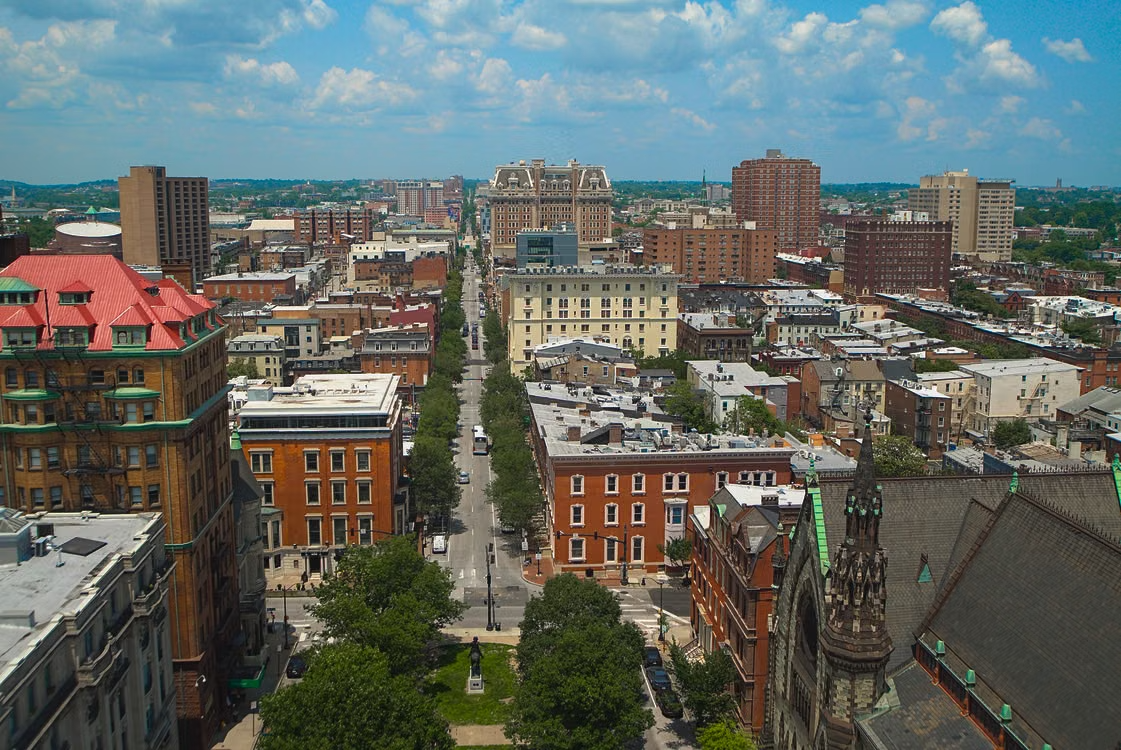
Choosing among the best neighborhoods in Baltimore starts with the type of home you want, because that narrows the map fast. If you want a detached house with a yard and trees, look north to Roland Park or Mount Washington and plan on driving. If a historic brick rowhouse with a stoop is the dream, the rowhouse neighborhoods stretch from the waterfront in Fells Point and Canton to the central blocks of Mount Vernon, Bolton Hill, and Charles Village. For a modern high-rise with a garage, the Inner Harbor is the clear pick.
Then weigh price against commute. The waterfront neighborhoods cost the most to rent and put you closest to downtown on foot. Move inland or north and rents ease, but you trade some walkability for a car. Charles Village, Mount Vernon, and Bolton Hill are the more affordable central options, and they keep you close to the center.
Finally, go walk it. If you are moving to Baltimore, spend a Saturday morning on The Avenue in Hampden or along the promenade in Canton, then see how the same block feels on a weeknight. Parking, noise, and the walk to a grocery store are things you only really learn on foot.
Frequently Asked Questions
What is the average home price in Baltimore, MD?
As of July 2026, the average list price for a three-bedroom house in Baltimore is about $324,450, based on Trulia data. Prices swing widely by neighborhood, from around $187,500 for a two-bedroom apartment in Charles Village to $420,000 for a three-bedroom house on the market in Mount Washington.
What is the average rent in Baltimore, MD?
As of July 2026, the average rent in Baltimore is about $1,490 for a one-bedroom apartment and $1,679 for a two-bedroom apartment, based on Trulia data. You can check current numbers on the average rent in Baltimore page. Rents are much higher near the water and lower in the central and northern neighborhoods.
What are the most expensive neighborhoods in Baltimore, MD?
The waterfront neighborhoods are the priciest. In Inner Harbor, a two-bedroom apartment averages $3,573 and a one-bedroom apartment on the market lists around $215,000. Fells Point is close behind at $3,364 for a two-bedroom apartment, with one-bedroom apartments listed around $224,900. In Canton, a two-bedroom apartment averages $2,612 to rent and about $374,500 to buy. All figures are as of July 2026, based on Trulia data.
What are the most affordable neighborhoods in Baltimore, MD?
From the neighborhoods outlined in this guide, in Charles Village, a two-bedroom apartment averages $1,688 and lists for about $187,500 to buy. Mount Vernon averages about $1,696 for a two-bedroom apartment, with one-bedroom apartments listed around $188,000. Bolton Hill averages $1,795 for a two-bedroom apartment, with one-bedroom apartments around $174,900. All figures are as of July 2026, based on Trulia data.
Is Baltimore, MD walkable?
Parts of it, yes. The harbor and central neighborhoods, including Inner Harbor, Fells Point, Federal Hill, Mount Vernon, and Canton, are genuinely walkable, with shops, restaurants, and the waterfront a short stroll away. Farther north and west, in places like Roland Park and Mount Washington, you will want a car for most trips.
What is commuting like in Baltimore, MD?
Most commutes here mix a car with some public transit. The free Charm City Circulator bus loops through downtown, the Light RailLink runs north to south with a handy stop in Mount Washington, and MARC trains connect the region for longer trips. Drivers rely on the Jones Falls Expressway and I-95, both of which slow at rush hour. Central neighborhoods can skip the car most days, while northern ones depend on it.